
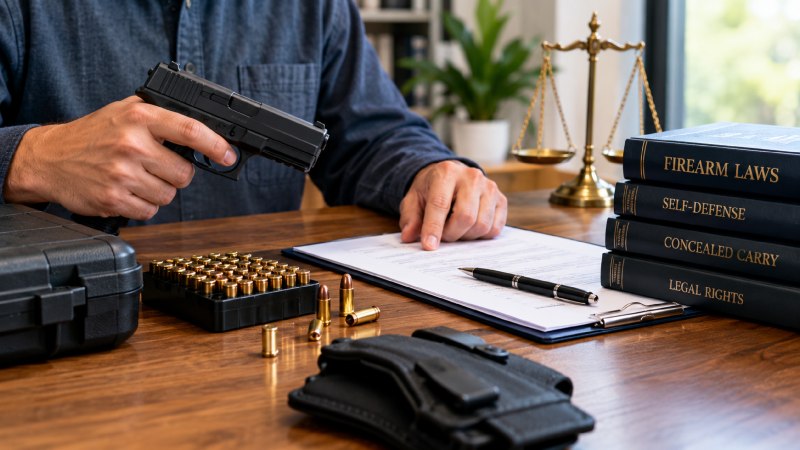
Obtaining a permit to own or carry a firearm is a significant step that comes with ongoing responsibilities. While receiving a license verifies that an individual has satisfied baseline legal standards, statutes evolve and location-specific ordinances vary widely. Understanding key statutory principles helps permit holders navigate everyday situations safely and remain in full compliance with governing bodies.
Here are five essential areas of law every permit holder must understand.
1. Understanding Self-Defense Laws and Justifiable Force
Self-defense statutes govern when physical or lethal force may be lawfully deployed to protect oneself or others. These statutes dictate the parameters of reasonable protection and vary considerably depending on the municipality or region.
The Duty to Retreat versus Stand Your Ground
Statutes generally handle self-defense scenarios using two distinct models. Certain jurisdictions impose a duty to retreat, which requires a person to make every reasonable effort to withdraw from a dangerous situation before choosing to deploy lethal force. Other regions implement Stand Your Ground statutes. These provisions permit an individual who is lawfully present in a given location to defend themselves without an obligation to run away first, provided they face an immediate, credible threat of severe bodily injury or death.
The Castle Doctrine
The Castle Doctrine specifically applies to a person’s home or residential property. This principle establishes a legal presumption that anyone who forcibly or unlawfully enters a home intends to cause serious injury or death to the occupants inside. As a result, property owners typically enjoy greater legal leeway when defending against intruders within their living space. However, this protection rarely extends beyond the boundaries of the home or immediate property.
2. Navigating Reciprocity and Inter-State Travel
Carrying a weapon across city, county, or state borders introduces significant legal risks for permit holders. A permit issued in one area might not hold valid status just a few miles away.
State Reciprocity Agreements
States maintain formal reciprocity agreements that establish which external carry permits they choose to honor. Some regions automatically recognize documentation issued by other states, whereas others maintain zero recognition policies. Permit holders must research state agreements before traveling to confirm their legal standing abroad.
Federal Regulations for Transporting Firearms
Federal legislation sets specific guidelines for traveling across state boundaries with weapons inside motor vehicles. Firearms must remain unloaded and placed in a secure, locked container that is not directly accessible to the driver or passengers, such as a trunk. Ammunition should also be stored separately from the weapon itself during interstate transit.
3. Safe Storage Standards and Liability Provisions
Proper storage practices protect households while shielding permit holders from severe legal consequences related to unauthorized access.
Preventing Access by Unauthorized Individuals
Numerous municipalities enforce laws requiring weapons to remain secured behind physical locks when not under the immediate control of the owner. These measures prevent unauthorized access by minors or visitors. Enrolling in structured local training, such as concealed carry classes in Jacksonville, Florida, helps permit holders learn local compliance rules and optimal storage methods.
Criminal Liability for Negligent Storage
When an unsecured weapon falls into the hands of an unauthorized individual or a minor and leads to injury or property damage, the registered owner may face serious criminal charges. Courts can hold gun owners liable for reckless endangerment or civil negligence if proper physical precautions were ignored. Secure options include locked safes, biometric boxes, or heavy cable locks.
4. Prohibited Locations and Gun-Free Zones
A valid permit does not grant unrestricted access to carry weapons in every public or private space. Specific locations remain off-limits under local and federal statutes.
Federal and State Off-Limits Buildings
Statutes prohibit weapons inside government facilities, courthouses, military installations, and secure areas of airports. Possessing a firearm within these restricted spaces carries severe felony consequences, regardless of whether the individual holds an active permit.
Private Property Restrictions and Posting Signs
Private business owners and property owners possess the right to restrict weapons on their premises. Many areas recognize standard warning signs placed at entrances as legally binding notices. Entering a posted establishment with a firearm can result in immediate criminal trespassing charges.
5. Protocol During Interactions with Law Enforcement
Interacting with police officers while carrying requires calm communication to ensure safety for everyone present.
Duty to Inform Requirements
Jurisdictions differ on whether an owner must immediately inform an officer about the presence of a weapon. Certain states enforce mandatory duty to inform laws, requiring permit holders to disclose their weapon and permit status at the very beginning of any traffic stop or official encounter. Other areas only require disclosure when explicitly questioned by the officer.
Maintaining Safe Demeanor
During traffic stops, drivers should keep their hands clearly visible on the steering wheel, keep internal lights turned on at night, and refrain from making sudden movements. Inform the officer where the weapon and legal documentation are located before attempting to reach for anything.