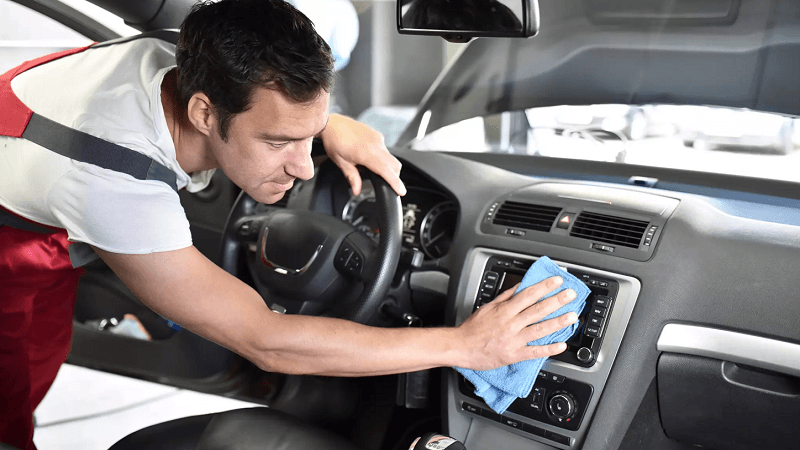
Ten years ago, mobile car detailing was a bloke with a bucket, a sponge, and a garden hose crammed into the back of a van. The results were hit and miss. The products were basic. And the whole operation felt like a step down from taking your car to a proper shop. If you wanted serious paint correction or long term protection, you had no choice but to drop the car off at a fixed location and hope for the best.
That’s changed completely. The mobile detailing industry has undergone a quiet technological revolution that most car owners don’t even know about. The equipment, products, coatings, and techniques available to today’s mobile operators rival and in some cases surpass what fixed location studios were offering just five years ago. Here’s what’s driving that shift.
Machine polishing went portable
The single biggest limitation mobile detailers used to face was power. Rotary and dual action polishers need consistent, reliable electricity. On a job site without a power outlet nearby, that meant running a petrol generator, which was loud, smelly, and often annoyed the neighbours. Many mobile operators simply skipped machine polishing altogether and relied on hand application of compounds, which is slower, less effective, and physically exhausting.
Modern cordless polishing machines changed the game. Brands like Rupes, Flex, and Milwaukee now produce battery powered dual action polishers that deliver the same correction capability as their corded counterparts. A fully charged battery runs for 30 to 45 minutes of continuous polishing, and most operators carry multiple batteries that swap in seconds. That’s enough to correct an entire vehicle without plugging into a single outlet.
This one innovation unlocked professional grade paint correction for mobile operators. A mobile detailer working in your driveway in Adelaide can now achieve the same mirror finish as a studio, using the same machines, the same pads, and the same compounds. The location stopped being a limitation.
Ceramic coatings replaced wax
For decades, the best protection a detailer could offer was carnauba wax. It looked great for a few weeks, then it degraded. Rain, UV, and daily driving stripped it away, and you were back to square one. Sealants lasted a bit longer but still measured their durability in months, not years.
The development of ceramic coating technology, specifically SiO2 (silicon dioxide) based formulations, fundamentally changed what “paint protection” means. A professional grade ceramic coating bonds chemically to the vehicle’s clearcoat at a molecular level. It doesn’t sit on top like wax. It becomes part of the surface. The result is a hydrophobic, UV resistant, chemically inert barrier that lasts years rather than weeks.
The technology has continued to evolve. Early ceramic coatings required controlled environments with specific temperature and humidity ranges to cure properly, which limited them to indoor studios. Modern formulations are far more forgiving. They can be applied outdoors in a wider range of conditions, which means a skilled mobile operator can prep, correct, and coat a vehicle in a residential driveway with results that match studio application.
Graphene infused coatings represent the latest generation. They offer even greater heat resistance and anti static properties, which means the coated surface attracts less dust and stays cleaner for longer between washes. For car owners in hot, dusty climates like Adelaide, that’s a meaningful practical advantage on top of the protection benefits.
Ozone generators miniaturised
Odour removal used to require either harsh chemical foggers or simply accepting that the car would always smell like whatever happened inside it. Professional ozone treatment was available but only at fixed locations that had industrial grade machines and controlled environments.
Portable ozone generators changed that. Modern units are compact enough to fit in a detailing van, powerful enough to fill an entire vehicle cabin with ozone gas in minutes, and sophisticated enough to run on timed cycles that optimise the treatment without producing excess ozone that would take hours to dissipate.
The science behind it is straightforward. Ozone (O3) is an unstable molecule that reacts with organic compounds, bacteria, mould spores, and odour causing particles. It breaks them down into harmless byproducts, primarily oxygen and carbon dioxide. Because it’s a gas, it reaches places that no cloth, brush, or steam cleaner can access: inside air conditioning ducts, deep within seat foam, underneath carpet backing, and behind door panels.
For mobile operators, this means they can offer a service that genuinely eliminates odours rather than masking them, all from a client’s driveway. A vehicle that reeks of cigarette smoke, pet hair, or mould at 9am can smell completely neutral by lunchtime.
Water reclamation and eco-friendly systems
Water usage has always been a sensitive topic for mobile detailers, particularly in regions with water restrictions. Traditional mobile washing used significant amounts of water, and the runoff containing soap, chemicals, and road grime would flow into stormwater drains.
Modern mobile setups have addressed this with self contained water systems. Many operators carry their own water supply in tanks mounted in the van, use low volume pressure washers that consume a fraction of what older equipment required, and employ water reclamation mats that capture runoff for proper disposal.
Some have gone further with waterless and rinseless wash solutions. These are chemical formulations that encapsulate dirt particles, allowing them to be safely wiped away without traditional rinsing. They use as little as two to three litres for an entire vehicle wash compared to 100+ litres for a conventional hose wash. The results are excellent on vehicles that are regularly maintained, and the environmental impact is negligible.
For car owners who are conscious about water usage, particularly during Adelaide’s dry summers when water restrictions tighten, this technology makes regular mobile detailing practical and guilt free.
Steam cleaning replaced chemical interiors
Interior detailing used to rely heavily on chemical cleaners, some of which left residues, strong odours, or damaged sensitive surfaces over time. Steam cleaning technology has largely replaced chemicals for interior work.
Commercial-grade steam machines produce dry vapour at temperatures exceeding 150 degrees Celsius. At that temperature, steam kills bacteria, dissolves grime, and lifts stains from fabric and leather without any chemical product at all. It’s safe on virtually every interior surface including leather, alcantara, suede, plastics, and glass. And because it uses dry vapour rather than wet steam, surfaces dry rapidly and there’s no risk of moisture damage to electronics or upholstery.
For mobile detailers, portable steam units mean they can deep clean an interior to a medical grade standard in a client’s driveway. Seats, carpets, dashboards, door cards, vents, and even seat belt buckles get sanitised without a single chemical touching the surface.
What this means for car owners
The net result of all these technological advances is that the gap between mobile and fixed location detailing has effectively closed. A well equipped mobile operator in 2026 carries better technology in their van than most studios had a decade ago. The convenience of having the work done at home no longer comes with a quality compromise.
For anyone who’s been putting off getting their car detailed because they assumed mobile meant inferior, the reality is the opposite. The technology has caught up, the products have evolved, and the operators who’ve invested in these tools are delivering results that speak for themselves.
If you’re in Adelaide and want to see what modern mobile car detailing looks like in practice, the difference between what you remember from ten years ago and what’s available today will surprise you. Same goes for car detailing prices across the industry. The technology improved, the results improved, and the cost didn’t increase proportionally. That’s a rare combination in any industry.