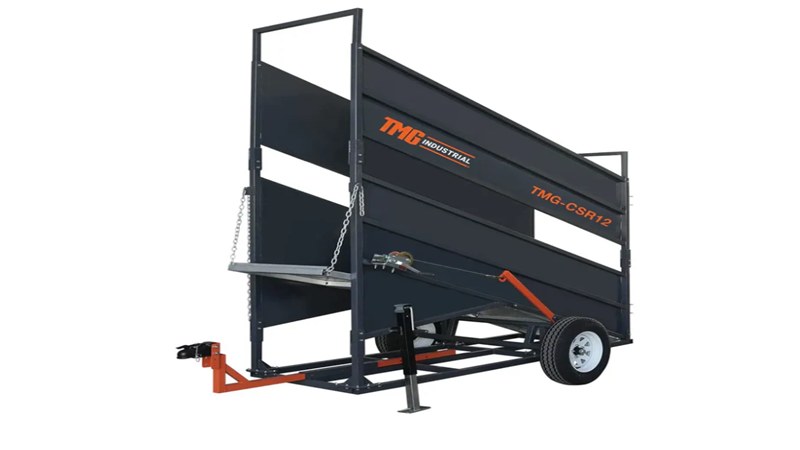
On the cattle country of Alberta and Saskatchewan, loading day sets the rhythm of the year. Calves go to auction in the fall, bred cows move between pastures, and animals ship to grass when the prairie greens in spring. A fixed chute ties that work to one corner of one yard, which rarely sits where the cattle are. A portable cattle loading ramp removes that limit by towing the loading point to the herd, letting a producer back a ramp up to a trailer in any pen, on rented grass, or at a remote handling site, and load stock with less stress on the animals and the crew.
How a Portable Ramp Works
A portable cattle loading ramp is a wheeled steel chassis carrying an inclined walkway with solid sides that guide cattle up to trailer-deck height. A winch raises and lowers the ramp to match different trailers, and the wheels retract or lift so the frame sits firm on the ground during loading. A ribbed, checkered floor gives footing on the climb, and the enclosed sides stop animals from seeing out and balking.
Animal Welfare and Efficiency
Cattle move best when they feel secure. A poorly built incline that flexes or rattles makes animals balk, and a balking steer slows the whole crew and raises the risk of injury. Solid-sided livestock loading equipment with a non-slip floor encourages steady forward movement, so a rancher near Lethbridge can load a trailer in minutes rather than fighting each animal up a makeshift bank. Calm loading also protects the animals from the bruising and stress that lower carcass quality and shipping weight.
Build and Capacity
The strength of an adjustable stock ramp rests on its chassis rating, hitch capacity, and floor structure. A chassis rated to twenty-six hundred pounds carries the weight of cattle on the incline, while a hitch rated to ten thousand pounds lets the ramp tow safely behind a truck. A winch with sufficient tension raises the loaded ramp smoothly, and reinforced ribs keep the floor flat under hoof pressure. A galvanized or well-coated frame resists the corrosion that manure, mud, and prairie weather drive into any steel left outdoors year round.
Performance Factors
Several conditions decide how well cattle handling equipment performs on loading day:
- Ramp height range matched to your trailers
- Chassis and hitch ratings for your stock
- Floor grip on a wet or frosty surface
- Side height that blocks the animals view
- Ground firmness under the parked frame
During a wet fall near Saskatoon, producers park the ramp on gravel or board to stop the wheels from sinking and the incline from shifting under load.
Safe Operating Practices
Set the ramp on firm, level ground and chock or anchor it before loading. Match the deck height to the trailer carefully, keep handlers out of the kick zone, and inspect the winch cable and welds before each move. Never tow the ramp with animals on it.
Types and Accessories
Fixed ramps suit a single busy yard, while portable models serve operations that handle cattle in several locations. Useful additions include adjustable side panels, a sorting gate at the base, and rubber matting for extra grip in freezing conditions.
What Buyers Should Weigh
Choosing a loading ramp is a question of fit to your operation. Before buying, weigh these factors:
- Height adjustment range for your trailers
- Chassis and hitch capacity for your cattle
- Floor design and grip for wet climates
- Towing weight behind your available truck
- Warranty and parts support within Canada
- Side height and gating for low-stress flow
Advantages and Limitations
Advantages:
- Brings the loading point to the herd
- Adjustable height suits many trailers
- Solid sides keep cattle moving calmly
Limitations:
- Needs firm ground to sit securely
- Towing requires an adequate hitch rating
- Winch and cable need routine inspection
Industry Outlook
As Canadian beef operations consolidate and travel farther to handle leased pasture, mobility is becoming as important as strength in handling gear. Designs are moving toward easier height adjustment, better footing for cold-climate loading, and integrated sorting. The expanding range of cattle handling and livestock equipment reflects a wider shift toward low-stress stockmanship, where calm, efficient loading protects both animal welfare and the value of every head shipped.