
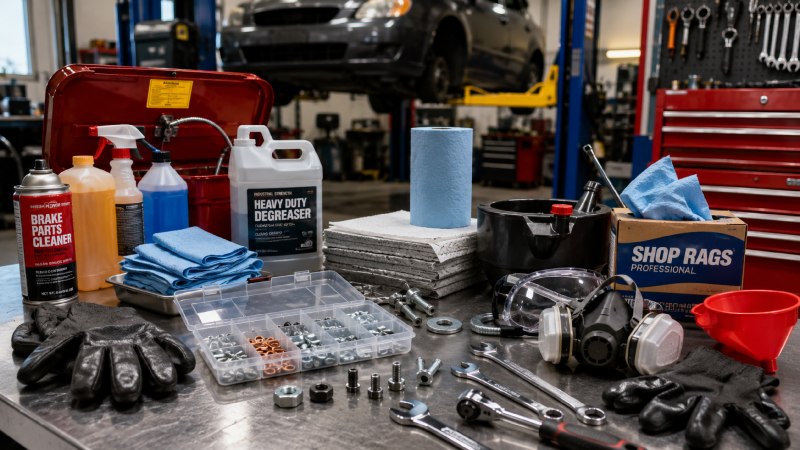
In a fast-paced automotive repair facility or industrial service bay, time directly equals revenue. While diagnostic scanners, hydraulic lifts, and pneumatic impact wrenches usually command the most attention, a shop’s day-to-day productivity relies just as heavily on consumable supplies. Having the right shop consumables stocked and readily accessible prevents job stoppages, protects technician health, and maintains a clean, professional working environment.
Whether you are equipping a brand-new commercial garage or optimizing an established fleet maintenance department, having a strategic inventory of core supplies is non-negotiable. Here is a comprehensive guide to the essential shop supplies every professional mechanic needs to keep repair bays running at peak performance.
1. Chemical Cleaners and Heavy-Duty Degreasers
Automotive service inherently involves heavy contamination from motor oil, grease, road grime, and carbon buildup. High-performance chemical compounds are indispensable for surface preparation, component inspection, and proper reassembly.
- Brake and Parts Cleaners: Fast-evaporating solvent cleaners rapidly strip away oil, brake fluid, and road debris from rotors, drums, and calipers without leaving unwanted residue behind.
- Heavy-Duty Degreasers: Concentrated degreasing agents break down stubborn sludge on engine blocks, transmission housings, and underbody components prior to tear-down.
- Electrical Contact Cleaners: Modern vehicles rely heavily on complex sensor networks. Non-conductive contact cleaners safely remove oxidation and contaminants from sensitive wiring harnesses, pin connectors, and mass air flow sensors.
2. Spill Control and Surface Cleanup Essentials
Maintaining a spotless work bay is not merely an aesthetic choice; it is a critical safety practice designed to eliminate slip hazards and meet environmental standards.
- Absorbent Granules and Hydrophobic Pads: Clay-based floor absorbents and synthetic spill pads react quickly to contain sudden oil, coolant, or fuel spills before they spread across the shop floor.
- Industrial Shop Rags: From wiping dipsticks and cleaning hand tools to prepping mating surfaces for fresh gasket seals, durable industrial shop rags provide the absorbency and strength required to handle aggressive solvents without shredding or leaving excess lint.
- Solvent Parts Washers: Dedicated recirculating parts washers allow mechanics to scrub disassembled gears, bolts, and brackets thoroughly, preventing abrasive grit from re-entering clean assemblies.
3. Fastener Assortments and Hardware Restocks
Nothing halts a billable repair faster than missing a single washer, stripped clip, or corroded bolt. Stocking organized hardware assortments keeps mechanics focused on the vehicle rather than searching through scrap bins.
- O-Rings and Copper Crush Washers: Fresh seals for oil drain plugs, air conditioning lines, and fuel injectors prevent persistent leaks and frustrating customer come-backs.
- Cotter Pins and Retention Clips: Critical safety fasteners on suspension linkages, ball joints, and brake components must always be replaced with new hardware during service.
- Threadlockers and Anti-Seize Compounds: Medium and high-strength anaerobic threadlocking fluids prevent fastener backing-out due to engine vibration, while anti-seize pastes shield spark plug and exhaust threads against thermal galling.
4. Personal Protective Equipment (PPE)
Protecting the physical health of technicians is a primary operational requirement for any professional facility. Providing constant access to high-grade personal safety gear prevents workplace injuries and maintains compliance with safety regulations.
- Heavy-Duty Nitrile Gloves: Premium 6mil to 8mil nitrile gloves shield skin from harsh petroleum products, solvents, and fuel while preserving the tactile sensitivity needed for fine mechanical assembly.
- Impact-Resistant Eye Protection: ANSI-rated safety glasses and full-face shields guard against flying metal shavings during grinding operations and chemical splashes during under-car service.
- Hearing and Respiratory Protection: Noise-canceling earmuffs or foam earplugs protect against high-decibel air tools, while dual-cartridge respirators filter out harmful dust and vapor during chemical spraying.
5. Fluid Handling and Transfer Tools
Clean, controlled fluid management minimizes waste, prevents cross-contamination, and reduces fluid spills across the shop.
- Fluid Evacuation Pumps: Pneumatic and manual fluid extractors streamline brake bleeding, differential fluid replacement, and power steering flushes.
- Color-Coded Funnels and Drain Pans: Assigning dedicated funnels and catchment containers to specific fluids (engine oil, coolant, automatic transmission fluid) eliminates chemical cross-contamination risks.
Summary
A fully stocked service bay forms the operational backbone of any successful repair facility. By investing in quality consumables—from specialized cleaning solvents to reliable surface wipes and protective equipment—mechanics can perform repairs efficiently, safely, and to the highest professional standard. Keeping these essentials in steady supply guarantees your team spends less time searching for materials and more time turning wrenches.