
Why the First Day Matters
In Kansas City, Missouri, water damage can begin with a frozen pipe, a failed water heater, an appliance leak, a backed-up drain, a roof intrusion, or heavy rain finding its way into a basement. What starts as a small puddle can travel under flooring, wick into drywall, soak insulation, and affect rooms beyond the original source. A calm response helps limit the loss, but safety should always come before speed. For homeowners facing a larger or more complex loss, see full details about water restoration options before deciding how to proceed.
The first 24 hours are especially important because damp porous materials can become harder to dry and may support mold growth if moisture remains. The Environmental Protection Agency advises homeowners to dry water-damaged areas and items within 24 to 48 hours when possible. That does not mean rushing into a dangerous space. It means making sound decisions early, documenting the situation, and beginning appropriate moisture control once the area is safe.
Make the Area Safe Before Entering
Keep children, pets, and anyone without proper protection away from the affected area. Do not walk into standing water if outlets, extension cords, appliances, electrical panels, or damaged wiring may be involved. Avoid rooms with a sagging ceiling, cracked wall surfaces, or flooring that feels unstable. If you smell gas, hear unusual electrical buzzing, or see signs of a serious structural problem, leave the home and contact the appropriate emergency service or utility provider.
Stormwater and floodwater require additional caution because they may contain sewage, chemicals, sharp debris, or other contaminants. The CDC’s safety steps for reentering a flooded home emphasize avoiding electrical risks and treating flood conditions seriously. Never turn electrical equipment on or off while standing in water.
Stop the Source, if It Is Safe
Once hazards have been ruled out, identify where the water is coming from. A toilet supply line, dishwasher hose, washing machine connection, or sink may have a local shutoff valve. A burst pipe or major leak may require shutting off the home’s main water supply. If the source is rainwater, groundwater, or a sewer backup, a valve may not solve the immediate issue. Do not reach through contaminated water or enter an electrically unsafe area just to stop the flow. Call a plumber, utility provider, or qualified professional when access is risky.
Document Damage Before Moving Anything
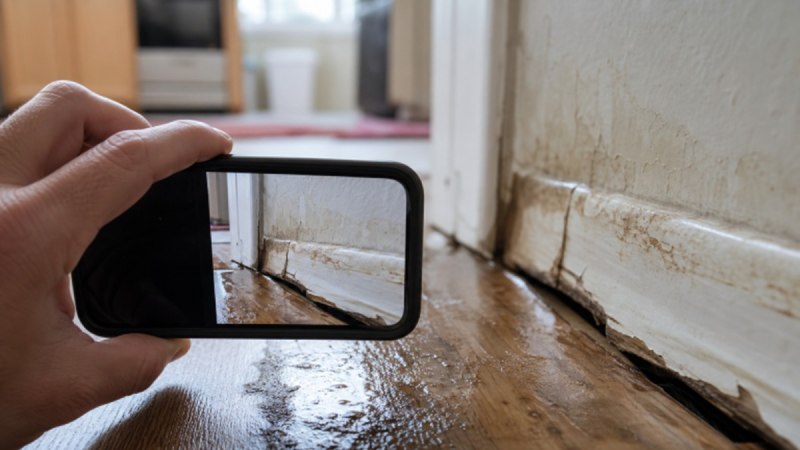
Thorough documentation can support insurance reporting, repair decisions, and conversations about belongings that may be salvageable. Before cleanup changes the scene, take wide photos of every affected room, close-up photos of damaged materials, and a slow walkthrough video. Record the date and time you discovered the loss, the apparent source, and the actions you took to control it.
- Photograph ceilings, walls, floors, cabinets, furniture, rugs, and personal possessions.
- Capture water staining, warped materials, and the water source when visible.
- Save receipts for emergency supplies, temporary lodging, plumbing work, and other related expenses.
- Do not discard damaged property until it has been documented and your insurer has advised you on the next steps.
Protect Belongings Without Spreading the Damage
If the space is safe, move lightweight belongings away from wet flooring. Prioritize electronics, paper records, photographs, medications, small furnishings, rugs, and clothing. Place foil, plastic blocks, or other nonabsorbent barriers beneath furniture legs when large pieces cannot be moved. Do not attempt to lift heavy waterlogged furniture, saturated carpet, or appliances alone. Avoid carrying contaminated items through clean areas of the house, since that can spread debris and moisture.
Decide Whether the Situation Is Safe for DIY Cleanup
A small amount of clean water on a hard, nonporous surface may be manageable with towels, mopping, and safe ventilation. The response should become more cautious when water has reached drywall, carpet padding, cabinets, insulation, wood flooring, or areas hidden from view.
- Small clean-water spill on hard flooring: Remove the water promptly, dry the surface, and watch for swelling, staining, or moisture around nearby edges.
- Water near electrical components: Stay out of the area and arrange for qualified electrical help.
- Sewage, floodwater, or unknown water: Avoid direct contact and seek a professional assessment.
- Wet walls, flooring, cabinets, or insulation: Consider moisture testing and controlled structural drying rather than relying on surface drying alone.
Avoid Common Cleanup Mistakes
Well-intended shortcuts can worsen a water loss. Do not use a standard household vacuum to remove standing water. Do not cut into a sagging ceiling, turn on wet appliances, paint over damp walls, caulk wet materials, or install new flooring before the underlying structure is dry. Fans can help with clean-water drying when electrical conditions are safe, but they should not be used to blow contaminated air through the home. If an HVAC system may have been affected, avoid running it until it has been evaluated.
Begin Drying and Moisture Control
Water extraction and structural drying are not the same thing. Removing visible water is the first step, while drying requires attention to humidity, air movement, dehumidification, and moisture trapped beneath finishes. Wet carpet padding, baseboards, subfloors, drywall, and insulation can hold water even after a room appears dry. In humid weather, open windows and fans alone may not remove enough moisture. The EPA notes that moisture control is central to preventing mold growth, which is why hidden dampness deserves attention after any significant loss.
Make the Right Calls During the First Day
- Contact a plumber or utility provider if the water source needs repair or shutoff.
- Report the loss to your insurance carrier and ask about documentation, mitigation, and policy requirements.
- Contact a qualified restoration professional if water has spread through porous materials, entered hidden spaces, or may be contaminated.
- Call an electrician if water reaches outlets, wiring, the electrical panel, or appliances.
- Seek structural guidance if ceilings, walls, floors, or foundations appear unsafe.
Understand How Water Type Changes the Response
Not all water damage should be handled the same way. Clean water may come from a supply line before it contacts contaminants. Gray water may contain detergent, food residue, or other contaminants from appliances and drains. Black water can include sewage or hazardous contamination. The more uncertain or contaminated the water is, the less appropriate a DIY cleanup becomes.
What Happens After the First 24 Hours?
Drying may take several days, while repairs may take much longer. The next phase can include moisture checks, removal of materials that cannot be dried or cleaned, odor control, cleaning, and eventual reconstruction. A homeowner can often handle a minor clean-water spill, but hidden moisture, contaminated water, and extensive saturation call for trained support. The right order remains simple: stay safe, stop the source when possible, document the damage, protect belongings, and dry the property thoroughly.