
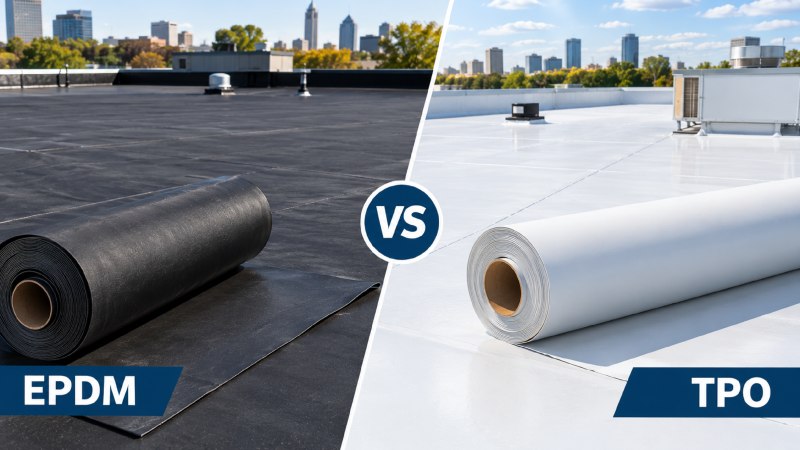
Choosing the right roof can make a big difference for a commercial building in Northeast Ohio. EPDM & TPO Roofing systems are two popular choices for low-slope and flat commercial roofs. When comparing EPDM and TPO, building owners should look at weather, roof life, maintenance, energy use, and installation needs. This guide also covers comparing EPDM and TPO installation options so you can better understand how each system works.
Both systems use a single-ply membrane, but they work in different ways. EPDM uses a strong rubber material, while TPO uses a flexible thermoplastic membrane. Because Northeast Ohio gets snow, rain, strong summer sun, and freeze-thaw weather, the right choice depends on the building and its needs.
What Is EPDM Roofing?
EPDM stands for ethylene propylene diene monomer. It is a synthetic rubber material that has been used on commercial roofs for many years. An EPDM roofing membrane is flexible and can handle many types of weather.
One major benefit of EPDM is its flexibility. The material can expand and contract as temperatures change. This feature matters in Northeast Ohio because roofs may face hot summer days and very cold winter nights.
EPDM also offers good UV resistance. Sunlight can slowly damage some roofing materials, but EPDM is designed to handle long-term outdoor exposure. With proper care, this material can provide reliable protection for many commercial buildings.
What Is TPO Roofing?
TPO stands for thermoplastic polyolefin. It is another type of single-ply membrane used on commercial flat and low-slope roofs.
TPO has become popular because it combines flexibility with strong weather protection. One of its main advantages is its light-colored surface, which can reflect sunlight. This can support an energy-efficient commercial roofing strategy, especially during warmer months.
Another important feature is seam welding. Contractors use heat to join TPO membrane seams. When installed correctly, these welded seams create a strong connection between membrane sections.
The result is a roof system that can resist water, sunlight, and normal outdoor exposure.
EPDM vs TPO: Main Differences
When making a flat roof material comparison, it helps to look at the main differences instead of focusing on one feature.
Material
EPDM is a rubber membrane. It has a long history in commercial roofing and remains a common option.
TPO is a thermoplastic membrane. It uses heat-welded seams and often has a white or light-colored surface.
Sun and Heat
Both materials can handle outdoor exposure. However, TPO is often selected for its reflective surface.
This reflective roofing feature can reduce how much sunlight the roof absorbs. As a result, it may help reduce cooling demand during hot weather.
EPDM can also perform well in the sun because it provides good UV resistance. However, its traditional dark surface absorbs more heat.
Cold Weather
Cold weather matters in Northeast Ohio. Snow, ice, and repeated temperature changes can place stress on commercial roofing.
EPDM’s rubber-like flexibility allows it to move with temperature changes. TPO also has flexibility, but its performance depends heavily on proper installation and product quality.
Therefore, property owners should consider the full roofing system, not only the membrane.
How Northeast Ohio Weather Affects the Choice
Northeast Ohio has changing weather throughout the year. A commercial roof may experience snow in winter, heavy rain during storms, strong sunlight in summer, and repeated freeze-thaw cycles.
These conditions make installation quality very important.
For example, water can enter through weak seams, damaged flashing, or poor drainage. Snow and ice can also create extra weight and stress.
That is why owners should choose a roofing system that matches the building’s structure and drainage design. A professional inspection can help identify these needs before installation begins.
TPO Roofing Benefits for Commercial Buildings
There are several TPO roofing benefits that make this material attractive for commercial properties.
First, its reflective surface can help reduce heat absorption. This may support lower cooling needs during hot weather.
Second, TPO uses heat-welded seams. These seams can create a strong water-resistant connection when a trained roofing crew installs them correctly.
Third, TPO can work well for many low-slope commercial buildings. Warehouses, offices, retail spaces, and other commercial properties may use this type of system.
However, TPO is not automatically the right choice for every building. Roof design, insulation, drainage, existing conditions, and installation quality all matter.
Why Businesses Still Choose EPDM
EPDM remains a trusted option because of its flexibility and long history in commercial roofing.
An EPDM roofing membrane can handle temperature changes and outdoor exposure. It can also work well on many low-slope roofs.
For some buildings, owners may prefer EPDM because they already have experience with the material or because it fits their roof design and maintenance plan.
In addition, EPDM can be repaired when small problems appear. Regular inspections help find damaged areas before they become larger issues.
Installation: Why Workmanship Matters
The best roofing material can still fail if contractors install it poorly.
During installation, the crew must prepare the roof surface correctly. They may need to remove damaged material, repair decking, improve insulation, check flashing, and correct drainage problems.
For TPO, proper seam welding is especially important. The crew needs to create consistent and secure welded seams.
For EPDM, installers must properly handle membrane connections, flashing, and other roof details.
This is why comparing EPDM and TPO installation options should include more than the membrane itself. Look at the contractor’s experience, installation process, warranty, inspection methods, and maintenance support.
Energy Efficiency and Reflective Roofing
Energy use is another important point in this EPDM & TPO Roofing comparison.
TPO’s light-colored surface can reflect more sunlight than a traditional dark EPDM surface. This can help reduce heat buildup on the roof during sunny weather.
For businesses that use air conditioning during summer, this feature may be worth considering.
Still, energy performance depends on more than the membrane. Insulation, ventilation, building use, roof design, and local weather all affect energy use.
Therefore, property owners should consider the complete roof assembly rather than selecting a material based on color alone.
Maintenance and Roof Coating
Regular maintenance can extend the useful life of a commercial roof.
Building owners should schedule inspections and look for damaged membrane areas, blocked drains, loose flashing, standing water, and damaged seams. They should also inspect the roof after major storms.
A roof coating may be useful in some situations, but it does not replace every type of repair or roof replacement. A contractor should first inspect the existing roof and determine whether coating makes sense.
Small problems should receive attention early. This simple step can help prevent water damage and larger repair bills later.
Which System Should Northeast Ohio Businesses Consider?
There is no single answer for every commercial building.
EPDM may suit owners who want a flexible rubber membrane with a long history of commercial use. TPO may appeal to businesses that want reflective roofing and heat-welded seams.
The building itself should guide the final decision.
Consider:
- Roof size and slope
- Existing roof condition
- Drainage system
- Insulation needs
- Expected roof lifespan
- Energy goals
- Local weather exposure
- Maintenance plans
- Contractor experience
- Warranty coverage
These factors give owners a clearer picture than simply asking which material is better.
Final Thoughts
Both EPDM and TPO can provide dependable protection when the system matches the building and the contractor installs it correctly. EPDM & TPO Roofing each have useful features, but their differences make one system more suitable for certain commercial properties than another.
EPDM offers flexibility, proven performance, and strong UV resistance. TPO offers reflective roofing, heat-welded seams, and potential energy benefits. For Northeast Ohio businesses, weather, roof design, drainage, insulation, and installation quality should all be part of the decision.
Before starting a project, get a professional roof inspection and compare the complete system, not just the material price. A qualified commercial roofing contractor can explain the options and help you understand which system fits your building, budget, and long-term maintenance plan.
In the end, EPDM & TPO Roofing should be evaluated based on the actual needs of the property. Careful planning today can help protect the building for many years.