
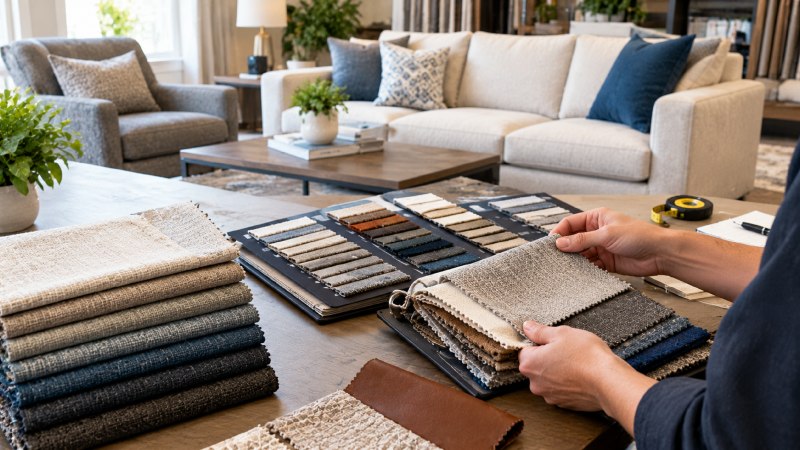
Shopping for a sofa or armchair usually starts with shape. People picture a deep, cushy sofa, a tailored loveseat or a pair of accent chairs by the window. The frame and silhouette get most of the attention. The fabric often gets picked last, from a small swatch, in a few minutes.
That’s backwards, in a way. Fabric is the part of upholstered furniture you touch every day. It decides how the piece feels, how it handles spills and pets, and how it looks after five or ten years of use. A sofa with a great frame and the wrong fabric can look tired long before it should.
Think About Who Uses The Room
Before looking at colors or patterns, think honestly about how the living room gets used. A formal sitting room that hosts guests a few times a month needs something very different from a family room where kids eat snacks and the dog naps on the cushions.
A few questions help:
- Do children or pets use the furniture daily?
- Does anyone eat or drink on the sofa?
- Does the room get strong direct sunlight?
- Will people lounge for hours, or sit briefly?
- How much time do you want to spend on cleaning?
The answers narrow the field quickly. A busy household needs durability and easy cleaning first. A quieter room can put softness and appearance ahead of toughness.
Understanding Durability Ratings
Many upholstery fabrics come with an abrasion rating, often measured by a rub test. The fabric is rubbed repeatedly by a machine until it shows wear, and the result is reported as a number of rubs or cycles. Higher numbers generally mean a tougher fabric.
For light use, such as an accent chair in a guest room, a lower rating may be fine. For a family sofa used every day, a higher rating is worth looking for. Ask about it when comparing swatches. A salesperson or designer should be able to tell you which fabrics suit heavy use and which are better for occasional seating.
Weave matters too. Tightly woven fabrics usually hold up better than loose weaves, which can snag on pet claws, jewelry or buttons. Fabrics with long, loose threads on the surface look beautiful but are easier to pull.
Comparing Common Fabric Types
Each material has strengths and tradeoffs.
Cotton and linen
Feel soft and breathable, with a relaxed, natural look. They can wrinkle and stain more easily, so they often work best with a protective treatment or in lower-traffic rooms.
Wool
Is durable, warm and naturally resists some soiling. It holds its shape well and suits homes in colder climates.
Velvet
Adds richness and depth, and modern versions are often tougher than people expect. It does show marks from pressure and can collect pet hair.
Performance fabrics
Are engineered to resist stains, moisture and fading. They’ve become a popular choice for families and pet owners because spills often wipe away with water.
Leather
Is easy to wipe clean and tends to soften and develop character over time. It can scratch, and it feels cool in winter and warm in summer.
There’s no single best choice. The right fabric balances comfort, look and how much wear it needs to handle.
Color And Pattern Choices
Light, solid fabrics look fresh and airy, but they show every stain and pet hair. Darker solids hide some marks but can show lint and dust. Mid-tones and fabrics with subtle texture or small patterns are often the most forgiving, since they disguise everyday wear without looking busy.
Sunlight is another factor. Fabrics in a sunny room can fade unevenly, especially on cushions closest to a window. Choosing fade-resistant materials, rotating cushions regularly and using window treatments during the brightest hours all help.
It’s also smart to think about the long term. A bold color may feel exciting today and dated in a few years. Many people choose a neutral fabric for large pieces like sofas and sectionals, then bring in color with pillows, throws and accent chairs, which are easier and cheaper to change.
Why Seeing Fabric In Person Helps
A tiny swatch under store lighting only tells part of the story. Fabric looks different in daylight, at night under lamps, and across a large piece of furniture than it does as a small square.
Shoppers browsing living room furniture Maine showrooms and other independent retailers often find stores offering thousands of fabric options along with design staff who can help narrow them down. That guidance is useful, because the sheer number of choices can be overwhelming. A good designer will ask about kids, pets, sunlight and style, then pull a handful of fabrics that actually fit the household.
When possible, take larger samples home. Drape them over your current sofa for a few days. Look at them in the morning and at night. Rub them with your hand and see how they feel against bare skin. This simple step prevents a lot of buyer’s regret.
Matching Fabric To The Piece
Different pieces in a living room can use different fabrics. A sofa that gets heavy daily use may need a tough performance fabric. An accent chair that’s mostly decorative can carry a more delicate velvet or a bold pattern. Ottomans and benches, which often get used as footrests or extra seating, benefit from durable, easy-clean materials.
Mixing fabrics can make a room feel more layered and personal. A common approach is to keep large pieces in solids and use texture or pattern on smaller ones. Keeping colors within a related palette helps everything feel connected.
Caring For Upholstery Over Time
Even the best fabric lasts longer with a little care. Vacuum upholstery regularly to remove dust and grit, which wear down fibers over time. Blot spills quickly instead of rubbing them. Rotate and flip loose cushions so they wear evenly. Check the cleaning code on the fabric before using any cleaner, and consider professional cleaning every year or two for heavily used pieces.
A Choice Worth Slowing Down For
Upholstered furniture is often one of the bigger purchases for a home, and it stays in daily use for years. Taking time to choose the right fabric, rather than grabbing a swatch at the end, helps a sofa or chair look good, feel comfortable and handle real life for a long time. The frame gives a piece its shape. The fabric decides how well it lives with you.