
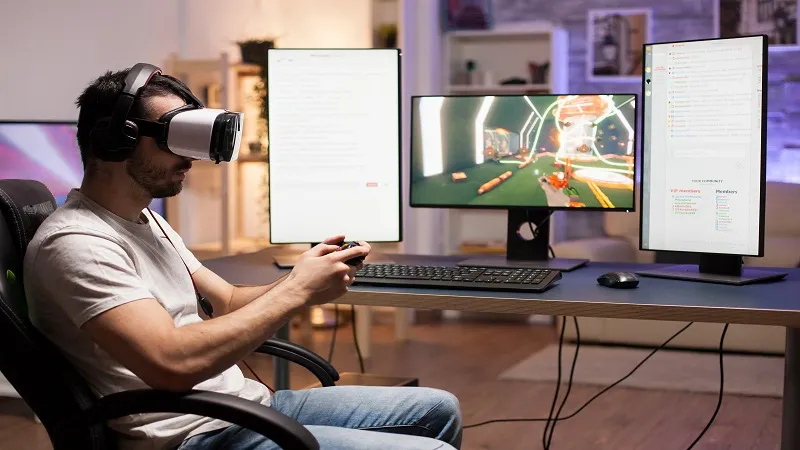
Improving your gaming skills takes more than simply spending extra hours playing. In many cases, improvement comes from understanding your settings, practicing with a purpose, learning from mistakes, and making better decisions during a match. Good habits can make a noticeable difference whether you enjoy competitive shooters, strategy games, RPGs, sports titles, racing games, or casual multiplayer games. This guide brings together practical gaming tips uggworldtech readers can use to improve their gameplay without turning every gaming session into a long training routine. The goal is simple: play smarter, understand your weaknesses, and build skills that actually help you in the games you enjoy.
Start by Understanding Your Playing Style
Before changing every setting or copying another player’s setup, think about how you normally play. Some players naturally prefer aggressive gameplay. Others perform better when they take their time, gather information, and wait for the right opportunity. Neither approach is automatically better.
Think about these questions:
- Do you usually attack first or react to opponents?
- Do you make more mistakes when playing too quickly?
- Do you struggle with aiming, movement, positioning, or decision-making?
- Do you perform better alone or with teammates?
What is the main area of your gameplay that you would like to get better at? Once you identify your weakest area, your practice becomes much more useful.
Adjust Your Gaming Settings Carefully
Your settings can affect how comfortable and consistent a game feels. Still, no single setup will suit every player’s needs and preferences.
Graphics and frame rate
If your system struggles to maintain a stable frame rate, lowering demanding graphics options can make gameplay feel smoother. Visual quality is important, but consistency is often more useful during competitive play.
Mouse or controller sensitivity
Avoid changing sensitivity every few matches. Choose a comfortable starting point and spend enough time with it to develop muscle memory. If your aim feels too fast, lower the sensitivity slightly. If you constantly run out of space while turning, you may need a small increase.
Field of view
Games that offer a field-of-view setting give you another way to customize your experience. A wider view can improve awareness in some games, but an extreme setting may make distant objects harder to see. Make small adjustments and test them before deciding.
Audio
Sound can provide important information in many games. Keep useful effects clear enough to hear footsteps, reloads, vehicles, environmental sounds, or other important cues. There is no need to make everything extremely loud. The aim is to separate useful sounds from unnecessary background noise.
Practice One Skill at a Time
One of the biggest mistakes players make is trying to improve everything during one session. Instead, choose one specific skill.
For example:
- Spend one session working on aim.
- Practice movement during another session.
- Focus on positioning during your next match.
- Review your decision-making after a difficult game.
A focused practice session makes it easier to notice progress. If you are working on aim, do not worry about winning every practice match. Concentrate on keeping your crosshair controlled and making accurate shots.
Improve Your Aim and Accuracy
Accurate aiming depends on more than just reacting quickly. Accuracy also depends on positioning, anticipation, and consistency. Keep your crosshair where opponents are likely to appear. In shooter games, keeping your crosshair at an appropriate height can reduce the amount of movement needed when an opponent appears. Instead of looking at the floor while moving, develop the habit of keeping your aim ready for likely targets.
Warm up before competitive matches
A short warm-up can help you become comfortable with your controls before entering a serious match. You could spend five to ten minutes practicing:
- Tracking moving targets
- Controlled flicks
- Recoil management
- Target switching
- Basic movement while aiming
Keep the routine simple. A short focused warm-up is easier to maintain than an unnecessarily long one.
Learn Movement Instead of Moving Randomly
Movement is an important part of many competitive games. Effective movement makes it tougher for opponents to hit you, helps you find safety, and gives you more chances to gain an advantage in combat. Practice the movement mechanics that actually exist in your game. These may include strafing, crouching, sliding, dodging, sprinting, jumping, or movement abilities. Avoid using advanced movement skills just because they look impressive when others perform them. First understand when and why the technique is useful. A movement trick that makes you lose control of your aim is not helping you.
Learn the Map
Map knowledge can give you an advantage even when your mechanical skills are still developing.
Pay attention to:
- Common routes
- Safe areas
- Dangerous open spaces
- High-ground positions
- Cover locations
- Objective locations
- Frequently used entry points
- Escape routes
You do not need to memorize the entire map in one day. Learn one area at a time and notice how experienced players move through it. After several sessions, you will begin to recognize common situations before they happen.
Stop Making the Same Mistake Twice
Losing a match does not automatically mean you played badly. Sometimes the other team simply made better decisions. Instead of asking only, “Why did I lose?” ask: “What happened immediately before things went wrong?” Maybe you moved into an exposed area. You might have activated an important ability before the right moment. Maybe you chased an opponent instead of protecting the objective. Maybe you ignored information from a teammate. Finding the first mistake is often more useful than watching an entire match without a specific purpose.
Use Replays and Match Reviews
If your game provides replay or match-history features, use them. You do not need to review every second of a match. Choose one or two important moments.
Look for:
- Poor positioning
- Missed opportunities
- Unnecessary fights
- Bad ability usage
- Slow reactions
- Repeated movement patterns
- Decisions made without enough information
Write down one thing to improve in your next session.
This creates a simple cycle:
Play → Review → Identify → Practice → Play again
That approach can be more productive than simply increasing your total playtime.
Make Better Decisions During Fights
Strong players do not win every encounter because they have perfect aim. They often create better situations before the fight begins. Before taking an unnecessary fight, consider:
- Do I have cover?
- Do I know where the opponent is?
- Do I have enough health or resources?
- Is my teammate nearby?
- What happens if I lose this fight?
- Is there a better position available?
Sometimes the best move is not attacking. Waiting for a better opportunity can be a sign of good decision-making rather than hesitation.
Manage Resources Wisely
Many games include resources that can change the outcome of a match. These might include:
- Ammunition
- Healing items
- Currency
- Abilities
- Equipment
- Energy
- Cooldowns
- Consumables
Avoid spending important resources simply because they are available. Think about what you may need later. In team-based games, resource management can also become a team decision. Communicating before using an important ability or item can prevent wasted opportunities.
Improve Communication With Teammates
Good communication does not require constant talking. The best callouts are usually short and useful. Instead of saying: “I think someone might be over there somewhere.” Try to provide specific information: “Two players near the right entrance.” Useful communication should tell teammates what they need to know without creating unnecessary noise. Also avoid blaming teammates after mistakes. Blame rarely improves the next round. A calm team can recover from a bad play more easily than a team that spends the rest of the match arguing.
Learn Your Role
If you play team-based games, understand what your character, class, or position is supposed to contribute. Depending on the game, your role might involve:
- Starting fights
- Supporting teammates
- Defending an objective
- Providing information
- Controlling an area
- Dealing damage
- Protecting weaker teammates
You do not have to do everything. A player who performs one role reliably can be more valuable than someone constantly switching between responsibilities.
Keep Up With Game Updates
Modern games can change frequently. Game updates can change how weapons, characters, maps, abilities, items, and other gameplay features work. This means a strategy that worked several months ago may not remain equally effective. When a major update arrives:
- Read the important changes.
- Test affected mechanics in a safe environment.
- Check whether your usual strategy still works.
- Adjust your settings or playstyle only when necessary.
- Give yourself time to adapt.
Following gaming trends can be useful, but do not change your entire playstyle every time something new becomes popular.
Avoid Blindly Copying Pro Players
Watching experienced players can teach you a lot, but copying their exact setup is not always the answer. A professional player’s:
- Sensitivity
- Keybinds
- Controller settings
- Graphics settings
- Playstyle
- Practice routine
May have been developed around their own equipment and experience. Instead of copying everything, study why they make certain decisions.
Ask yourself:
- Why did they move there?
- Why did they wait?
- Why did they choose that weapon?
- Why did they avoid the fight?
- Why did they rotate at that moment?
Understanding the reasoning behind a strategy is more valuable than copying the action itself.
Take Breaks When Your Performance Drops
Long gaming sessions are not always productive. If you notice that you are making simple mistakes, becoming frustrated, or losing concentration, take a break. Get away from the screen for a few minutes, stretch, drink some water, and return when you feel ready. If you are playing competitively, continuing while frustrated can lead to poor decisions and unnecessary losses. The goal is not to play endlessly. The goal is to make the time you spend gaming more enjoyable and productive.
Create a Simple Weekly Practice Routine
You can improve your skills without following a strict or detailed practice plan. Try something like this:
Monday: Settings and Warm-Up
Check your controls and spend a few minutes warming up.
Tuesday: Aim or Mechanics
Choose one mechanical skill and practice it consistently.
Wednesday: Map Knowledge
Learn useful routes, positions, objectives, or common engagement areas.
Thursday: Strategy
Think about positioning, timing, resource management, and decision-making.
Friday: Team Play
Focus on communication, role awareness, and coordinated actions.
Weekend: Review
Play normally and review a few important moments from your matches. The routine can be adjusted depending on the game you play and the amount of time you have available.
Keep Gaming Enjoyable
Improvement matters, but gaming is supposed to be enjoyable. If every session becomes a test of performance, gaming can start feeling like work. Play different modes when you want a change. Try a new genre occasionally. Play with friends. If ranked matches start to feel exhausting, step away from competitive play for a while. A healthy approach is to have both goals:
Improve when you want to improve, and play simply for fun when you want to relax.
Gaming Tips UggWorldTech: A Simple Checklist
Before your next gaming session, remember these points:
- Check your controls and settings.
- Warm up for a few minutes.
- Choose one skill to focus on.
- Pay attention to positioning.
- Learn the map gradually.
- Communicate useful information.
- Manage important resources.
- Review mistakes instead of blaming yourself or teammates.
- Follow meaningful game updates.
- Take breaks when concentration drops.
- Keep your practice consistent.
- Remember to enjoy the game.
You do not need to apply every tip at once. Choose two or three areas that matter most to your current gameplay and work on those first.
Conclusion
Becoming a better gamer is usually the result of small improvements repeated over time. Better settings can make controls more comfortable, while focused practice can improve mechanical skills. Map knowledge, positioning, communication, and decision-making can help you perform more consistently during real matches.
The most useful gaming advice is not always the most complicated. Start with one weakness, practice it with a clear purpose, review your results, and make another small adjustment.
At UggWorldTech, we aim to share practical gaming tips uggworldtech readers can understand and apply to their favorite games. Whether you are learning the basics, returning to a familiar game, or trying to improve in competitive matches, a focused approach can help you get more from every session. Most importantly, give yourself time to improve. Good gaming habits develop gradually, and progress does not have to happen all at once.