
Look Beyond Color and First Impressions
A front door is one of the first things people notice, but its job extends far beyond curb appeal. It influences daylight in the foyer, privacy from the street, comfort near the entry, security, and the way family members move in and out every day. Many homeowners begin with a familiar size, such as 36×80 single front doors, then narrow their options based on style, glass, finish, and the condition of the existing opening.
A door that looks excellent in a photograph may be less practical when it faces strong afternoon sun, sits close to a sidewalk, or receives constant use from children, pets, and deliveries. The most successful choice considers the complete entry system: the door, frame, glass, threshold, weatherstripping, hardware, trim, and installation details.
Match the Door to the Home’s Architecture
Start with the features that are already permanent: siding or brick, rooflines, porch columns, window patterns, trim depth, and exterior lighting. The door does not need to copy every architectural detail, but it should look connected to the rest of the facade rather than added as an afterthought.
- Traditional homes often suit raised panels, divided glass, symmetrical layouts, and classic hardware.
- Craftsman homes commonly work well with strong horizontal lines, simple lower panels, and grouped upper glass.
- Modern homes can support clean surfaces, larger glass areas, minimal ornament, and streamlined pulls or lever handles.
- Farmhouse-style homes often benefit from warm finishes, restrained detailing, and welcoming proportions.
- Older homes deserve special attention to scale, trim profiles, and details that respect the original character.
Decide How Much Natural Light the Entry Needs
The amount of glass has a major effect on the feel of the entry. A solid door creates a strong visual anchor and offers the greatest visual privacy. A small upper light introduces limited daylight. Three-quarter-glass and full-lite doors can brighten a dark foyer dramatically, while sidelights and transoms can add light without making the door itself entirely transparent.
Ask a simple question before choosing a design: Is the entry dark during the day? If it is, glass may reduce the need for artificial lighting and make the foyer feel more open. If the room already receives abundant daylight, a more solid door may better support privacy and give the front elevation a stronger focal point.
Balance Daylight With Privacy
Clear glass provides the most visibility, while frosted, textured, tinted, and patterned glass can soften views into the home. Privacy should be evaluated in both daylight and darkness. A glass panel that appears discreet from the outside during the day can reveal more silhouettes when the interior lights are on at night.
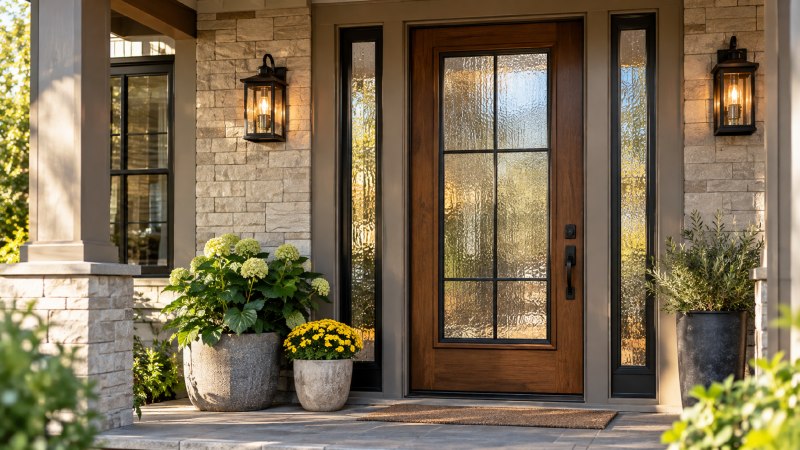
Photorealistic close view of a welcoming front entry at golden hour, featuring a thoughtfully designed front door with textured glass, warm wood or deep painted finish, coordinated hardware, and soft sunlight casting natural shadows across the porch.
- Stand at the sidewalk, driveway, and any nearby walkway.
- Consider what visitors or passersby could see through the planned glass area.
- Repeat the exercise after dark with interior entry lights switched on.
- Select a glass style and placement that fit the home’s sightlines and comfort level.
Compare Common Front Door Materials
No door material is ideal for every property. Climate, roof coverage, direct sun, moisture exposure, finish quality, and willingness to perform maintenance all affect the right decision.
- Wood: Natural grain and rich color variation give wood a distinctive appearance. It generally needs routine inspection and finish maintenance, particularly at exposed entries.
- Fiberglass: Fiberglass doors are often chosen for low-maintenance upkeep and can be manufactured with wood-grain textures.
- Steel: Steel doors can provide a firm, durable feel and are commonly considered when strength and value are priorities.
- Composite: Composite construction may offer a balance of durability, appearance, and reduced upkeep, depending on the product design.
Check Energy and Comfort Details
Evaluate the door as a full assembly rather than as a slab alone. The frame, threshold, glass package, seals, and installation all influence drafts and temperature comfort. The U-factor and solar heat gain coefficient help describe how a glazed product manages heat transfer and sunlight, while air-leakage ratings address air moving through joints in the assembly.
In plain language, a lower U-factor generally indicates better resistance to heat transfer. A lower solar heat gain coefficient allows less solar heat through glass, which can be helpful at entries exposed to intense sun. These ratings should be considered alongside the local climate, the direction the entry faces, and the amount of glass in the selected door.
Measure the Opening Before Ordering
Measuring only the old door slab is not enough. The rough opening, frame condition, threshold height, wall depth, trim, and swing direction can all determine whether a replacement will fit and function correctly.
- Measure the width at the top, middle, and bottom of the opening.
- Measure height at both sides and near the center.
- Inspect the frame for rot, water damage, warping, or signs that it is out of square.
- Record the swing direction from inside the house.
- Check whether the open door could interfere with walls, stairs, railings, or furniture.
- Confirm whether the project calls for a slab, a prehung unit, or full frame replacement.
Choose Between a Slab and a Prehung Door
A slab is the door panel only. A prehung unit typically includes the door installed in a new frame with hinges, sill components, and weather seals. A slab can be appropriate when the existing frame is sound, square, and compatible with the new panel. A prehung unit is often the better choice when the old frame is damaged, drafty, warped, or difficult to adjust.
Keeping an aging frame may appear to save time, but it can preserve the very problems that cause sticking, uneven gaps, or poor weather resistance. Proper exterior-door installation aims for smooth operation and a weathertight fit that limits water and air infiltration.
Select Hardware for Daily Use
Hardware should match the door’s scale and be comfortable to use every day. A lever handle can make one-handed entry easier, while a deadbolt, viewer, camera, or smart lock may improve convenience and visibility. Confirm that the lockset works with the door thickness and factory preparation, and choose finishes that coordinate with exterior lighting, house numbers, and railings.
Common Front Door Mistakes to Avoid
- Choosing a style without considering the home’s architecture.
- Selecting clear glass without checking nighttime privacy.
- Ignoring sun, rain, snow, and wind exposure.
- Measuring only the slab instead of the complete opening.
- Keeping a damaged frame solely to reduce the initial project cost.
- Choosing attractive hardware that feels awkward or inconvenient in daily use.
- Focusing on the door price while overlooking seals, threshold details, and installation quality.
Questions Homeowners Often Ask
Is a Full-Glass Front Door Too Exposed?
It depends on the entry location, nearby homes, walkway traffic, porch depth, glass texture, and nighttime lighting. A full-glass design may feel appropriate on a private porch, but less comfortable near a busy public sidewalk.
Are Wood Doors Difficult to Maintain?
Wood doors generally require more attention to finish than some alternatives, especially when exposed to direct sun and moisture. A protected entry and regular inspection can help preserve the finish and appearance.
Should a Replacement Include a New Frame?
A new frame is worth considering when the existing frame is warped, damaged, drafty, or out of square. A slab-only replacement can make sense when the current frame remains structurally sound and compatible.
Final Checklist Before Ordering
- Does the style suit the architecture of the home?
- Is the amount and type of glass right for daylight and privacy?
- Can the material handle the entry’s exposure and maintenance needs?
- Have all opening measurements been confirmed?
- Is the existing frame in good condition?
- Will the door swing work with the surrounding space?
- Do the hardware and finish support daily use?
- Have professional sealing, fitting, and adjustment been included in the installation plan?
Conclusion
The right front door should look natural on the exterior while working reliably in every season. By weighing architecture, light, privacy, materials, measurements, hardware, and installation, homeowners can choose an entry that feels welcoming on day one and remains practical for years to come.