
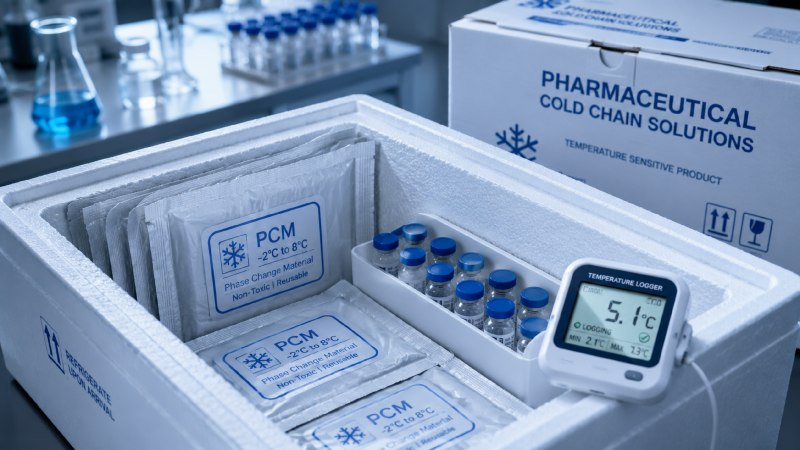
Maintaining precise temperature control during the distribution of biopharmaceuticals, vaccines, and cell therapies is one of the most critical challenges in modern healthcare logistics. Even minor thermal fluctuations can compromise product potency, render life-saving medications ineffective, or cause complete batch losses. Traditional thermal packaging systems relying on water-based ice packs or hazardous dry ice often struggle to provide tight thermal stability across diverse climate zones.
Phase change materials represent a major leap forward in passive thermal packaging technology. By absorbing and releasing thermal energy during physical transitions between solid, liquid, or gaseous states, these engineered compounds maintain specific temperature thresholds far more effectively than conventional cooling mediums.
The Science and Functionality of Advanced Thermal Engineering
Thermal packaging engineered with phase change substances relies on latent heat storage to buffer sensitive payloads against external environmental changes. Unlike sensible heat storage, which experiences a continuous temperature rise as energy is absorbed, latent heat absorption holds a constant temperature throughout the entire phase transition process.
Chemical Formulations and Thermal Latency
Phase change solutions utilize organic paraffin waxes, inorganic salt hydrates, or bio-based vegetable oils engineered to freeze and melt at precise target temperatures. For example, formulations designed for refrigerated biopharmaceuticals maintain a strict two to eight degrees Celsius range. The molecular structure of these compounds allows them to absorb substantial thermal energy without raising the internal temperature of the shipping container until the physical transition is fully complete.
Precise Temperature Range Tailoring
Custom chemical synthesis enables logistics providers to select thermal materials that freeze or thaw at exact operational targets. Whether a product requires ambient-controlled room temperature, refrigerated storage, or frozen conditions, specific chemical blends match those precise parameters. This customization prevents accidental product freezing, which remains a primary cause of damage in traditional water-ice packaging systems.
Key Operational Advantages in Pharmaceutical Distribution
Replacing traditional ice bricks with engineered phase change panels fundamentally improves the reliability, efficiency, and sustainability of global pharmaceutical supply chains.
Superior Payload Protection Across Extreme Ambient Profiles
International shipping lanes subject cargo to unpredictable weather patterns, tarmac delays, and extreme climate changes. Thermal shippers lined with engineered phase change panels form an active-like thermal barrier within a passive container. This barrier absorbs ambient heat during summer transits and insulates against freezing conditions during winter transport routes, extending total hold times beyond ninety-six hours without electrical power requirements.
Payload Volume and Weight Optimization
Traditional coolant systems often require large volumes of water ice or gel packs to maintain thermal integrity, adding significant tare weight and reducing usable payload space. Engineered phase change panels offer significantly higher energy storage density per unit volume. This thermal efficiency enables smaller, lighter packaging designs that lower freight expenditures and maximize volumetric efficiency during air and ground transport.
Integration in Complex and Ultra-Cold Supply Chains
As biopharmaceutical innovation shifts toward personalized medicine and advanced biologics, distribution networks must handle increasingly diverse temperature profiles simultaneously.
Supporting Specialized Ultra-Low Transport Systems
While phase change formulations excel in refrigerated and ambient ranges, ultra-low temperature logistics often require specialized equipment. High-value biological specimens and genetic materials rely on cryogenic vapor shippers to maintain deep frozen states below negative one hundred fifty degrees Celsius during long-distance transport. Integrating phase change materials into outer protective shippers adds an essential secondary insulation layer that guards against unexpected shipping delays.
Sustainability and Closed-Loop Circularity
Environmental compliance and waste reduction goals are reshaping healthcare logistics strategies. Unlike single-use dry ice or disposable gel packs, high-performance phase change containers are designed for repeated deployment in closed-loop supply chains. Durable outer casings allow panels to be cleaned, thermalized, and reused hundreds of times, significantly reducing plastic packaging waste and environmental impact.
Regulatory Standards and Quality Control Protocols
Deploying thermal packaging in pharmaceutical logistics requires rigorous validation to comply with international distribution guidelines and quality management standards.
Validation Testing and Thermal Profile Qualification
Packaging manufacturers subject thermal containers to chamber testing that simulates real-world distribution hazards. Test protocols expose containers to rapid temperature cycling to verify that internal conditions remain within strict quality parameters throughout simulated transit durations.
Continuous Monitoring and Digital Integration
Modern thermal shippers frequently incorporate internet-of-things sensors and data loggers alongside phase change panels. Real-time temperature tracking provides complete visibility into the shipment environment, verifying compliance with good distribution practice standards from manufacturing plant to final delivery.