
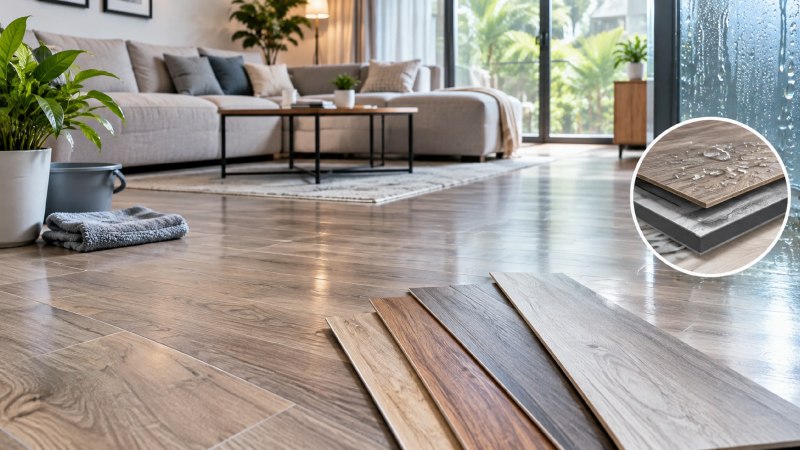
If you live somewhere warm and humid, you already know what moisture does to a home. Timber doors swell and stick. Grout darkens. Wooden floors cup at the edges or start to creak after a couple of wet seasons. Flooring takes the worst of it, because it sits closest to everything that brings moisture in: mopping, spills, wet feet from the bathroom and air that rarely dries out.
That’s why more homeowners in humid regions are moving to vinyl flooring. Here’s why it works, and how to choose the right type for your space.
Why Humidity Is Hard on Flooring
Natural materials breathe. Solid timber takes in moisture from the air and releases it again as conditions change. In a dry climate that movement is small. In a humid one it barely stops.
The results are familiar:
- Cupping and crowning: Timber boards curve as one side absorbs more moisture than the other.
- Gaps and squeaks: Boards shrink during air-conditioned months, then swell again.
- Mould under the surface: Trapped moisture under floating floors or carpets can go unnoticed for months.
- Hollow tiles: Ceramic tiles can debond when the bed underneath shifts, leaving tiles that sound hollow when tapped.
Tropical cities show this clearly. In Singapore, for example, relative humidity commonly sits well above 70% for much of the year, according to the Meteorological Service Singapore. Homes there run air-conditioning in some rooms and open windows in others, so floors face constant swings in moisture.
What Makes Vinyl Different
Modern vinyl flooring is built in layers: a protective wear layer on top, a printed design layer, and a core underneath. The key point is that the core is synthetic, so it doesn’t absorb moisture the way wood does.
That gives vinyl three big advantages in humid homes:
- It stays dimensionally stable. Boards don’t swell, cup or shrink with the seasons.
- It resists spills and mopping. Surface water can be wiped away without seeping into the material.
- It’s easy to keep clean. There is no grout to stain and no finish to re-seal.
Vinyl is also softer and quieter underfoot than tile, which matters in apartments where neighbours share floors and walls.
SPC vs LVT: Which Core Suits Your Home?
Not all vinyl is the same. The two types most homeowners compare are SPC and LVT.
SPC (stone polymer composite) has a rigid core made from limestone powder and PVC. It’s very stable, handles temperature swings well, and usually clicks together without glue. That makes it a strong choice for living rooms and bedrooms where you want a solid feel.
LVT (luxury vinyl tile) is thinner and more flexible. It’s often glued down, which suits areas where you want a low floor height, or where the floor meets existing tiles and you need a smooth transition.
As a rough rule, SPC suits most living spaces, and LVT suits tight spaces or projects where floor height matters. A good installer will check your subfloor before recommending either. Uneven floors need levelling or screeding first, whatever type you pick.
Wood Look or Marble Look?
One reason vinyl has caught on is that the designs have become far more convincing. Embossed textures now follow the printed grain, so a wood-look plank feels like wood rather than flat plastic.
Wood-look vinyl brings warmth to bedrooms and living areas without the upkeep of real timber. Lighter oak tones make small rooms feel larger, and herringbone layouts add character to a hallway or study.
Marble-look vinyl gives a clean, bright finish for living rooms, kitchens and commercial spaces. You avoid the cost, weight and cold feel of real stone.
If you’re unsure which way to go, look at large samples in your own home’s light, not just in a showroom. Specialists such as Xin Furnishing explain how each finish behaves in humid conditions, which helps you narrow down the choice before you buy.
Tips to Make Vinyl Last in a Damp Climate
Vinyl is low maintenance, but a little care goes a long way:
- Prepare the subfloor properly. Most problems come from what’s underneath, not the vinyl itself.
- Leave expansion gaps around the edges for floating floors, even with stable SPC.
- Use a damp mop, not a soaking one. Vinyl handles water, but standing water at the joints is best avoided.
- Add felt pads under furniture legs to prevent dents and scratches.
- Choose a thicker wear layer for busy homes, homes with pets, or commercial spaces.
- Ventilate. Running a fan or dehumidifier keeps the whole home healthier, floors included.
Is Vinyl Right for You?
If you live in a humid climate and want floors that stay flat, look good and don’t need constant care, vinyl is hard to beat. Choose the core type for the room, pick a finish you’ll enjoy living with, and make sure the floor underneath is properly prepared.
Do that, and your new floor should stay looking good long after timber would have started to move.